Forest resources
Forest resources add up to everything gathered from the forest timber and other commodities harnessed for human usage. Forests are a renewable natural resource, which covers about one third of the earth's ice-free land surface. Peat is used to produce energy in production plants.
Raw material and coppice is being produced by forestry and forest management, timber production and wood procurement. Forests also have a recreational value. The largest part of the atmospheric oxygen and additional nutrition, such as berries, mushrooms and game comes from forests. Forests also absorb carbon dioxide, and thus slow down climate change. Finland's forest resources are growing steadily, exceeding the annual tree removal, in which case forest resources are augmented.

Ecological footprint analysis, however, shows that forest resources should be utilized effectively, in accordance with the rotation of the economy principles. FINLAND: About 60% of Finland's land area is forested, and Finland is the most forest rich country in Europe. The forestry sector accounted for 4.2% of gross domestic product - the value of exports of 11 355 million. Employment € 65 000 - Share of employed persons by 2.6%. Millions of tree seedlings are planted in Finland every year, mainly pine, spruce and birch. The oak, larch and various noble firs (Christmas trees) crops have increased. However, Finland is one of the few countries where the number of forests has not diminished.

Raw material and coppice is being produced by forestry and forest management, timber production and wood procurement. Forests also have a recreational value. The largest part of the atmospheric oxygen and additional nutrition, such as berries, mushrooms and game comes from forests. Forests also absorb carbon dioxide, and thus slow down climate change. Finland's forest resources are growing steadily, exceeding the annual tree removal, in which case forest resources are augmented.
Ecological footprint analysis, however, shows that forest resources should be utilized effectively, in accordance with the rotation of the economy principles. FINLAND: About 60% of Finland's land area is forested, and Finland is the most forest rich country in Europe. The forestry sector accounted for 4.2% of gross domestic product - the value of exports of 11 355 million. Employment € 65 000 - Share of employed persons by 2.6%. Millions of tree seedlings are planted in Finland every year, mainly pine, spruce and birch. The oak, larch and various noble firs (Christmas trees) crops have increased. However, Finland is one of the few countries where the number of forests has not diminished.
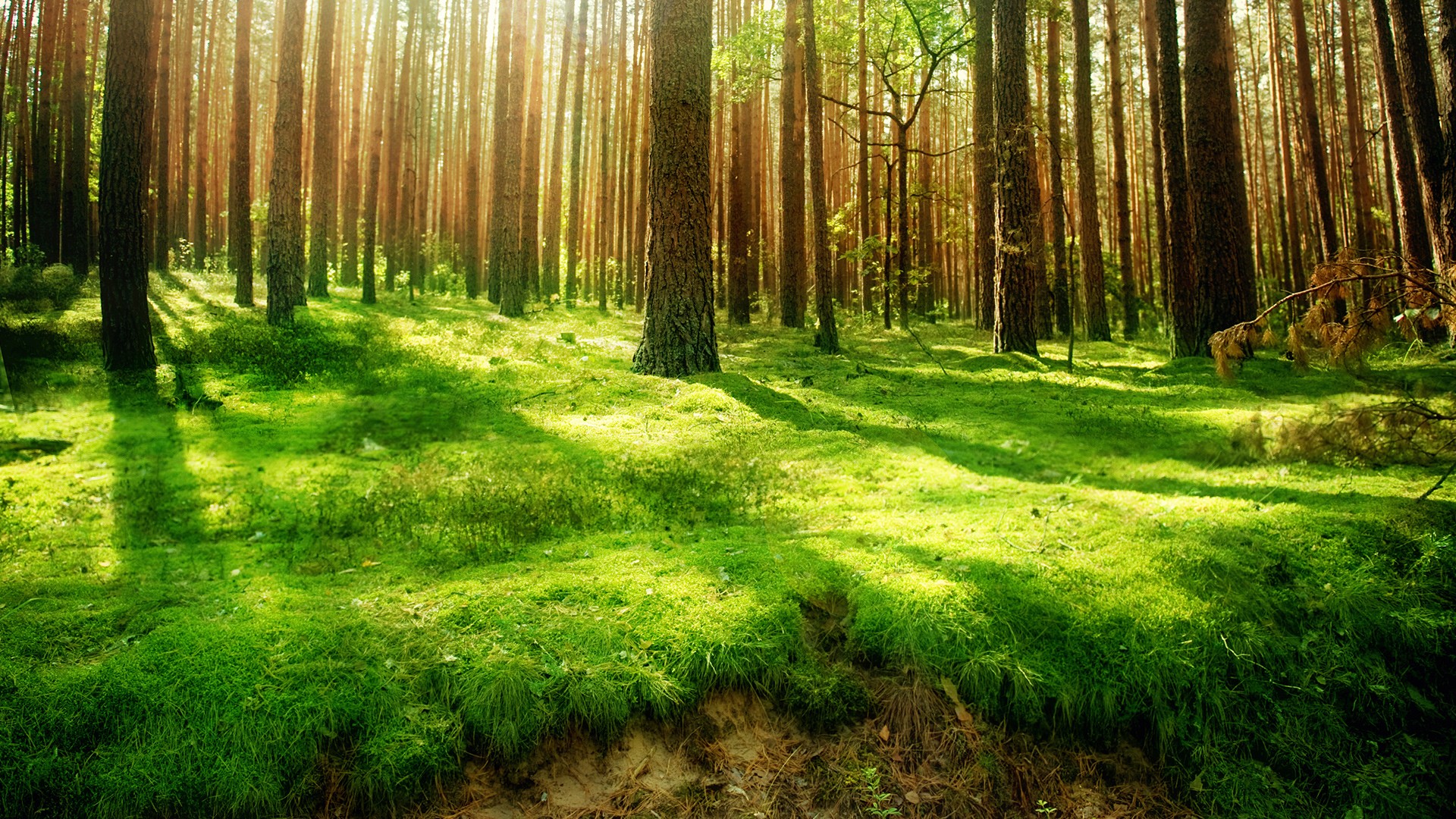
The use of forest resources in the world:
Coniferous forests (more than half of the forest raw material in industrt ) - paper, cardboard and wood raw material.
- Canada and Russia: in sparsely populated areas still battered little or no coniferous forests - - In addition to Russia, Canada and United States, Sweden and Finland also have a large coniferous tree market. - Europe and the United States have increased the number of coniferous forests , as they are planted in abandoned fields and felled deciduous forest areas.
- China: the new coniferous forest is planted more than anywhere else.
- China: the new coniferous forest is planted more than anywhere else.
The number of forests has decreased as a result of human activities , particularly in the tropical zone. The forests are replaced by arable land , growing for specialty trees (such as mahogany and teak ) search for more distant coasts, pulp and paper mills and sawmills are constantly being built especially in the developing countries.
The future outlook:
The forest will increasingly be seen as a source for biofuel, especially biodiesel due to pressure for the use of renewable fuels.
In our view, we should aim at prolonging the cultivation by clearing and burning-over woodland so that the soil wouldn´t become impoverished. Restricting or banning the felling of rainforests would also enable richer environment for the organisms and the threat for the extinction of animals would diminish.Old forests should be left untouched because there exist many living organisms which couldn´t thrive anywhere else and only young, renewable forests should be used as commercial forests. The use of forests for recreational purposes should also be perceived through sustainable perspective.

A questionnaire was also made to survey people´s knowledge and attitudes to forest resources.
Q1: "What are forest resources?" >>d) Renewable resources
Q1: "What are forest resources?" >>d) Renewable resources
Q2: "Where exist the biggest forest resources with respect to acreage?" >>b) Latin America
Q3: "Should forest resources be used more effectively?">>On scale 1 to 5: average 3
Q4: "Are you satisfied with the current forest industry in the world?" >>On scale 1 to 5: average 3,5
Q5: "How important are forests to you?">>On scale 1 to 5: average 3,5
Q6: "Define the word "Forest resources" >> Half of the interviewees gave the correct answer.
Q6: "Define the word "Forest resources" >> Half of the interviewees gave the correct answer.

.

Ei kommentteja:
Lähetä kommentti